Every Camera Is a Weapon Now: Speed Grapher's Dark Gift to the Surveillance Age
When Speed Grapher gave Tatsumi Saiga a camera that could literally destroy whatever it photographed, the creative team was working with a metaphor. Photography as violence. The lens as a threat. The act of capturing an image as something that can't be undone and can't be taken back. It was stylized, it was dramatic, and in 2005 it was the kind of heightened concept that felt safely contained within the genre.
Now it's just Tuesday.
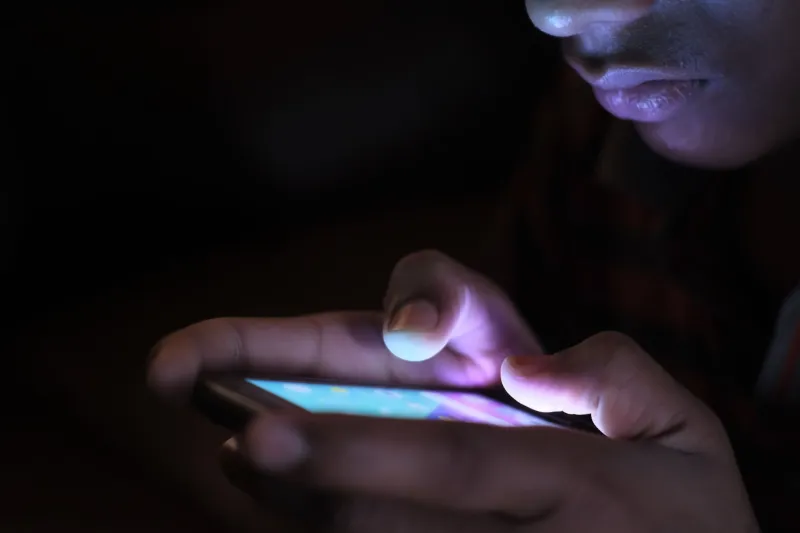
We live in a world where the camera in your pocket is simultaneously a communication device, a surveillance tool, a weapon for harassment, a platform for exploitation, and — in the hands of AI image generation — a machine for fabricating realities that never existed. Speed Grapher didn't predict all of that specifically. But it understood the essential truth underneath all of it: that the act of photographing someone is never entirely neutral, and that the power to capture an image is always, in some sense, a power over the person being captured.
The Original Sin of the Lens
Let's start with what Tatsumi's power actually is, stripped of the supernatural framing. He points a camera at something. The act of framing it, focusing on it, choosing to photograph it — that's when the power activates. The destruction follows from the documentation.
That's not as far from reality as it sounds. In the age of social media, the decision to photograph someone and share that image can functionally destroy things: reputations, relationships, careers, personal safety. The mechanics are different but the underlying dynamic — that the photographer holds a specific kind of power over the subject — is identical.
Speed Grapher leaned into this by making Tatsumi a war photographer before the events of the series. He's someone who has built his entire professional identity around capturing images of people in their most vulnerable, most exposed moments. The show never fully lets him off the hook for that. His power is a gift, but it's also a consequence — a physical manifestation of what his career already was. He's spent years pointing a lens at people who didn't fully choose to be seen. His Euphoric ability just makes the stakes explicit.
Non-Consent Is Baked In
One of the most uncomfortable things the series does, almost casually, is establish that photography is inherently an act that can be performed without the subject's agreement. You don't need someone's permission to photograph them in many contexts. You don't need their cooperation. You definitely don't need them to be okay with it afterward.
This is the exact legal and ethical gray zone that has become one of the defining social crises of the digital age. Non-consensual intimate image sharing — what used to be called revenge porn before advocates pushed for more accurate terminology — is now a recognized form of abuse with specific legislation in most US states. Deepfake technology has extended this into territory that didn't exist as a concept when Speed Grapher aired: fabricated images of real people, generated by AI, used for harassment, defamation, and sexual exploitation.
The show's instinct that photography could be weaponized against the person being photographed — that the camera could be a tool of violation rather than just documentation — was exactly right. It just couldn't have anticipated the specific forms that violation would eventually take.
Surveillance and the City That Watches Back
Speed Grapher's Tokyo isn't just a backdrop — it's a participant. The city is thick with observation: the Roppongi Club's intelligence networks, the police surveillance that Tatsumi has to dodge, the social hierarchies that monitor who belongs where and who's out of place. Everyone in the show is being watched by someone, and the question of who controls that watching is central to where the power actually lives.
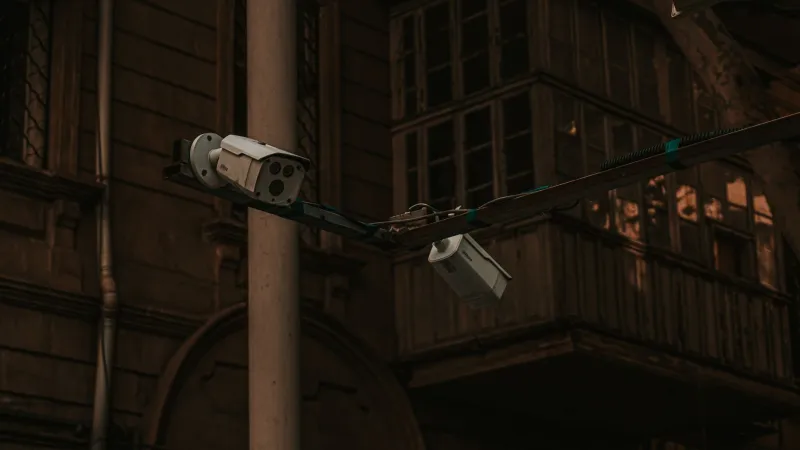
In the US in 2024, we have more cameras per capita than at any point in human history. Ring doorbells, traffic cameras, store security systems, smartphone cameras pointed in every direction at all times — the infrastructure of total surveillance has been built so gradually and so enthusiastically that most people have stopped noticing it. We've essentially constructed the panopticon and then complained that it doesn't come in more colors.
Speed Grapher's Tokyo feels oppressive because the watching is concentrated in the hands of a corrupt elite. Our version is more distributed, which sounds better until you realize that distributed surveillance without meaningful accountability is just oppression with better PR.
What Tatsumi Gets Right About the Journalist's Dilemma
Here's where the show does something genuinely thoughtful that often gets overlooked in discussions about its visual style and action sequences. Tatsumi isn't presented as simply heroic for using his camera. His power is framed as destructive from the beginning — the thing he points his lens at gets annihilated. Even when he's using it against people who deserve to be stopped, the show maintains an ambivalence about what it means to be someone whose primary tool is a device for capturing and exposing others.
That ambivalence maps almost perfectly onto contemporary debates about photojournalism ethics, the right to photograph in public spaces, and the moral responsibility of people who document suffering versus intervening in it. The camera-as-weapon metaphor collapses the distance between those questions in a way that's genuinely useful.
When a photojournalist publishes an image of someone in crisis — a refugee, a crime victim, a person experiencing a mental health episode — they're making a choice about exposure that the subject may not have consented to and may never recover from. That's not the same as Tatsumi's Euphoric power, obviously. But it's not entirely different, either.
The Frame Is Never Innocent
Speed Grapher's most lasting contribution to this conversation might be its insistence that there's no such thing as a neutral photograph. Every image is a choice — about what to include, what to exclude, what to emphasize, what to make permanent. The camera doesn't just record reality; it constructs a version of reality that then circulates independently of the person or moment it captured.
We're dealing with the downstream consequences of that truth in ways that would have been unimaginable in 2005. AI-generated images that never happened. Viral photos stripped of context and weaponized for political purposes. Facial recognition technology that can identify and track individuals across thousands of cameras without their knowledge.
Speed Grapher pointed a camera at all of this before any of it fully existed. It just dressed the warning in the aesthetics of a neo-noir action thriller, which is honestly a more honest packaging than most of what we've come up with since.
The camera in Tatsumi's hands was always the point. We just needed a few decades to catch up to what that meant.