When Being Seen Is the Wound: Speed Grapher's Most Psychologically Devastating Moments
There's a particular kind of horror that doesn't come from blood or fire. It comes from someone knowing exactly who you are when you desperately need them not to. Speed Grapher understands this at a cellular level, and it uses that understanding to do something most action anime never even attempt: it turns the act of being perceived into the most devastating weapon in its entire arsenal.
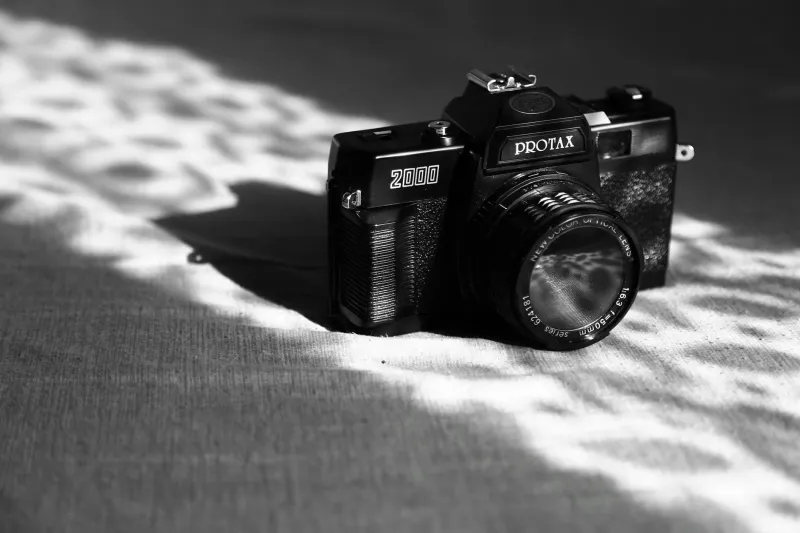
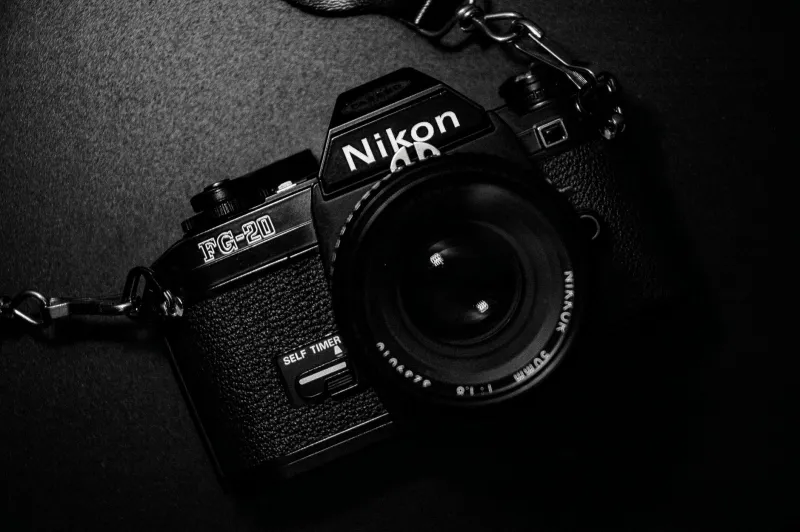
We talk a lot about Tatsumi Saiga's camera and what it can do to physical matter. That's the flashy stuff — the explosions, the crumbling architecture, the bodies. But the camera's real power in this series isn't destructive in any conventional sense. It's revelatory. And in Speed Grapher's world, revelation is the cruelest thing you can inflict on another person.
The Frame as Violation
Let's start with what the camera actually represents in visual storytelling terms. A frame isolates. It selects. It says, this thing here — this is what matters, this is what we're looking at. In most photography and cinema, that's a neutral or even celebratory act. You frame a sunset, a wedding, a child's first steps. You preserve something worth keeping.
Speed Grapher inverts that completely. When Saiga raises his camera — or when the series itself frames a character in a particular way — it's rarely gentle. The composition choices throughout the show have this uncomfortable intimacy to them, like the camera is getting closer than anyone asked it to. You see it in the way Kagura is shot in early episodes: small within large spaces, surrounded by ornate wealth that dwarfs her, the framing itself communicating her captivity before a single line of dialogue confirms it. She doesn't need to say she's trapped. The frame says it for her, and the frame doesn't flinch.
That's a form of exposure. The audience knows her situation before she's fully articulated it herself. We are, in a sense, surveilling her.
Trauma Without a Monologue
One of the things Speed Grapher does that separates it from a lot of its contemporaries is its willingness to leave psychological damage unspoken. American audiences are used to the trauma monologue — the scene where a character sits down, the music swells, and they explain in careful detail what happened to them and why it broke them. It's a convention that has its place, but it also has a sanitizing effect. Putting words to pain gives it shape. Shape makes it manageable.
Speed Grapher frequently refuses that comfort. Kagura's history with her mother, the environment she was raised in, the specific textures of her exploitation — the series often communicates these things through visual shorthand that feels almost aggressive in its economy. A posture. A flinch. The way she occupies space differently around certain people than she does around Saiga. You're not told she's been conditioned into compliance; you see it in the geometry of how she holds herself, and that's somehow harder to sit with than any explicit backstory dump.
The same applies to characters on the antagonist side of the ledger. Some of the Euphoric we encounter throughout the series carry their psychological histories entirely in their power sets and the visual language surrounding their introduction. The show trusts — maybe even demands — that you read the image rather than wait for the explanation. That trust is also a kind of implication: if you're watching closely enough to understand, then you're also close enough to feel complicit in knowing.
Surveillance as a Modern Mirror
Here's where Speed Grapher starts feeling genuinely prophetic to a 2024 American audience, and it's worth sitting with that for a second.
We live in an era where being seen without consent carries real consequences. Doxxing. Revenge content. The casual cruelty of someone screenshotting a private moment and blasting it across social media. The anxiety of knowing your location data, your browsing history, your biometric information is being catalogued somewhere by someone you'll never meet. The terror isn't physical — it's the terror of exposure, of having your most private self made public without permission.
Speed Grapher was working with these themes before most of us had smartphones. The Tennouza family's power structure essentially runs on blackmail and surveillance — knowing secrets, holding visibility over people's heads, using the threat of being seen as a leash. Saiga's camera power is terrifying to the elite not just because it can destroy things, but because it belongs to a journalist. Someone whose entire professional identity is built around making the hidden visible. In a world where the powerful survive by controlling what gets seen and what stays buried, a man who can literally force revelation is an existential threat.
That maps onto contemporary anxieties in ways the original creative team probably didn't fully anticipate. The whistleblower, the leaked document, the hacked database — these are all versions of the same thing Speed Grapher was dramatizing with a camera and a Goddess kiss. Exposure as weapon. Visibility as violence.
The Characters Who Can't Afford to Be Known
Look at virtually any significant character in Speed Grapher and you'll find someone whose survival depends on concealment. Suitengu's real motivations, his history, the specific shape of his rage — these are parceled out carefully, and the series is acutely aware that revealing them changes the audience's relationship to him. He's not just withholding from other characters; the narrative itself is protecting him from being fully seen until the moment it decides to expose him. When that moment comes, it lands hard precisely because of how long the concealment held.
Kagura, meanwhile, is the character most consistently denied privacy. She is looked at, evaluated, desired, and analyzed by virtually every adult in her life. The series frames this as the horror it is — her lack of privacy isn't freedom, it's a different kind of cage. Being perpetually visible, perpetually observed, offers no protection. If anything, it makes her more vulnerable, because there's nowhere left to hide.
That's the thesis the show keeps returning to, whether it states it outright or not: being seen by the wrong person, in the wrong context, without your consent, is its own category of harm. The camera doesn't have to explode anything to hurt you. Sometimes all it has to do is point.
Why This Lands Differently Now
Speed Grapher came out in 2005. The internet existed, but the specific surveillance infrastructure we live inside now — the algorithmic attention economy, the permanence of digital records, the ease with which private images become public property — was still taking shape. The show was ahead of the curve in ways that feel less like prescience and more like the creators understood something fundamental about power and visibility that transcends any specific technology.
Watching it now, especially as a US audience that has spent the last decade absorbing the cultural fallout of data breaches, celebrity leaks, and the weaponization of personal information, the show's central metaphor hits with an urgency its original broadcast run couldn't have anticipated. The camera isn't just a superpower. It's a mirror held up to every anxiety we have about who gets to control what the world knows about us.
And in Speed Grapher's world — as in ours — the answer is almost never the person who needs that control most.